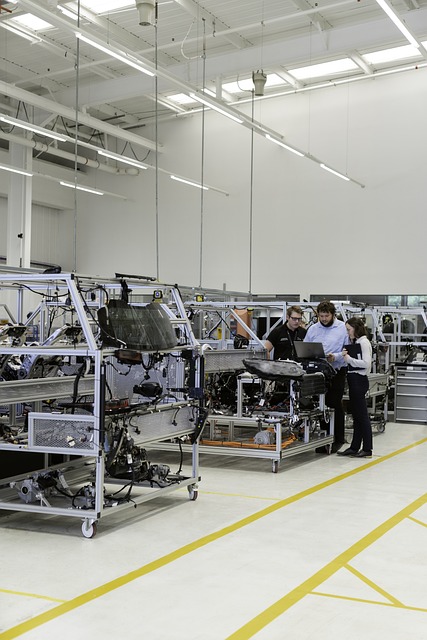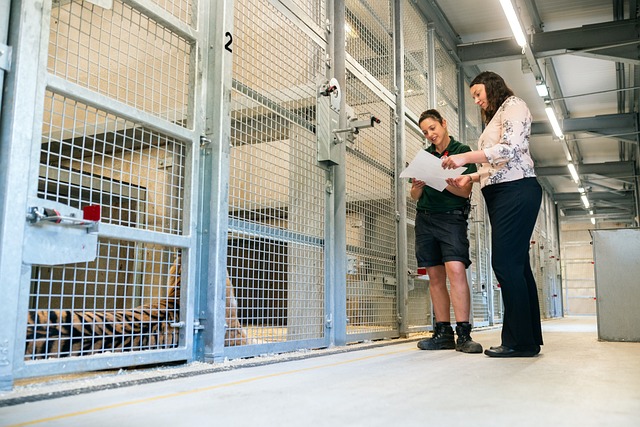

Commercial engineering services drive sustainable building design through holistic principles. This includes energy-efficient practices, material selection based on life cycle assessments (LCA), renewable integration, and green construction techniques for cleanrooms and beyond. Regular integrity checks, building automation, and retrofitting older structures further enhance sustainability, ensuring environmentally harmonious and cost-effective solutions throughout a building's lifecycle.
Structural engineering plays a pivotal role in shaping the sustainability of our built environment, particularly as we seek to construct and operate buildings with minimal environmental impact. As the demand for eco-friendly structures grows, so does the need for best practices that ensure structural integrity while promoting sustainability. This article delves into the essential strategies and techniques commercial engineering services employ to achieve this balance. We’ll explore how experts in structural engineering are revolutionizing design, leveraging advanced materials, and adopting innovative methods to create sustainable buildings that stand tall as environmental champions.
- Integrating Green Design Principles: Setting the Foundation
- Material Selection for Sustainability: Engineering Solutions
- Efficient Structural Systems: Optimizing Commercial Spaces
- Energy-Efficient Construction Techniques: Reducing Environmental Impact
- Lifespan Considerations: Ensuring Longevity through Commercial Engineering Services
Integrating Green Design Principles: Setting the Foundation
Integrating Green Design Principles is a foundational step for structural engineers aiming to create sustainable buildings. This approach not only reduces environmental impact but also enhances the building’s overall performance and value. At the heart of this process lies a holistic understanding of the interconnection between design, materials, and construction methods. Commercial engineering services can play a pivotal role in this regard, offering expertise in hospitality venue engineering solutions and cleanroom construction management, ensuring every project is designed and executed with sustainability in mind.
A key principle in green design is minimizing energy consumption. Engineers can achieve this by optimizing building orientation, incorporating natural ventilation strategies, and selecting energy-efficient materials. For instance, using advanced modeling software, engineers can predict and mitigate heat gain, reducing the need for air conditioning. This not only cuts down on energy usage but also lowers operational costs for commercial and hospitality venues. Additionally, engineering for scalable operations is essential to meet the evolving needs of tenants while maintaining sustainability. This involves flexible design elements and efficient systems that can adapt to changes in occupancy and usage patterns.
Cleanroom construction, a specialized sector within engineering, demands meticulous attention to detail and stringent quality control. Incorporating green practices in cleanroom design includes selecting low-VOC (Volatile Organic Compound) finishes, implementing efficient lighting systems, and utilizing recycled or easily recyclable materials. These measures not only reduce environmental impact but also create healthier interior environments. Moreover, cleanroom engineering solutions can be tailored to support scalable operations, ensuring these highly specialized spaces can adapt to changes in technological requirements and production demands.
Visit us at [process optimization through technology] to explore how our comprehensive approach, combining commercial engineering services, hospitality venue engineering solutions, and cleanroom construction management, can deliver sustainable buildings that meet the highest standards of performance and efficiency. By embracing these practices, structural engineers can contribute to a greener future while enhancing the value and longevity of their projects.
Material Selection for Sustainability: Engineering Solutions
Material Selection is a cornerstone of sustainable structural engineering, playing a pivotal role in reducing environmental impact while enhancing building performance. Commercial engineering services can lead this charge by strategically incorporating eco-friendly materials and designing for longevity. One key approach involves leveraging modern alternatives to traditional construction materials. For instance, substituting concrete with lightweight steel or advanced composite materials can significantly cut down on embodied energy and carbon emissions during production and transportation.
Structural engineering consulting firms specializing in sustainability often conduct thorough life cycle assessments (LCA) to guide material choices. These analyses consider the environmental impact of a material across its entire lifespan—from extraction and processing to fabrication, transportation, installation, use, and eventual disposal or recycling. This holistic perspective enables engineers to make informed decisions that balance short-term costs with long-term sustainability goals. For example, LCA might reveal that while a certain type of wood has lower embodied energy than steel, its availability in the local region could be limited, increasing transportation-related emissions.
Beyond material selection, structural engineering consulting services contribute to sustainable buildings through comprehensive construction document review and safety-focused structural integrity checks. Rigorous reviews ensure that designs meet stringent environmental standards while upholding safety regulations. Regular integrity assessments throughout a building’s lifecycle help identify potential issues early on, preventing costly repairs or hazardous situations. This proactive approach aligns with the goal of creating energy-efficient facility retrofits, which can achieve substantial reductions in operational costs and carbon footprints. Ultimately, these practices empower engineering professionals to deliver high-performing, sustainable structures that stand the test of time.
Efficient Structural Systems: Optimizing Commercial Spaces
In the realm of commercial engineering services, efficient structural systems play a pivotal role in creating sustainable buildings. Optimizing commercial spaces involves intricate considerations to ensure maximum functionality, minimal environmental impact, and cost-effectiveness. Integrated electrical system design is a key component that intertwines seamlessly with structural elements, enabling smart buildings that adapt to changing demands. By combining expert civil engineering advice with innovative technologies, engineers can craft structures that are not only aesthetically pleasing but also highly efficient in terms of energy consumption and resource utilization.
One practical insight into efficient structural systems is the integration of renewable energy sources directly into the building design. For instance, incorporating solar panels or wind turbines as part of the structural layout not only reduces carbon footprint but also generates clean energy, contributing to long-term cost savings for tenants. Additionally, leveraging advanced materials and construction techniques allows for lighter, more flexible structures that can withstand extreme weather conditions, enhancing structural integrity while minimizing waste.
A case in point is the recent development of a commercial complex that incorporated an on-site wastewater treatment plant engineered by specialists. This integrated approach significantly reduced the building’s overall environmental impact by diverting greywater for non-potable uses and treating blackwater efficiently. Such holistic design considerations not only align with sustainable engineering practices but also offer tangible benefits in terms of water conservation and financial savings over the lifespan of the structure.
To ensure optimal results, it is crucial to engage experienced professionals who understand the intricate interplay between structural, mechanical, electrical, and plumbing (MEP) systems. Complex project execution specialists can facilitate seamless coordination among various disciplines, ensuring that every component works in harmony to achieve sustainable goals. By leveraging expert knowledge and state-of-the-art tools, commercial engineering services can deliver buildings that not only meet current standards but also set new benchmarks for environmental stewardship and operational efficiency.
Energy-Efficient Construction Techniques: Reducing Environmental Impact
Structural engineering plays a pivotal role in creating sustainable buildings that minimize environmental impact. Among various best practices, energy-efficient construction techniques stand out as a cornerstone for commercial engineers aiming to reduce carbon footprints. By adopting innovative methods and strategies, commercial engineering services can significantly enhance the energy efficiency of both new constructions and existing facilities through complex project execution.
One effective approach involves integrating smart design elements such as proper insulation, high-performance windows, and natural lighting optimization. For instance, utilizing advanced modeling software allows engineers to predict and optimize energy performance before construction begins, ensuring that each design decision aligns with sustainability goals. Additionally, incorporating renewable energy sources like solar panels or wind turbines can further reduce a building’s reliance on conventional energy grids. Many commercial construction management firms are now specializing in these integrations, making it easier for developers to access cost-effective solutions without compromising quality.
Energy-efficient facility retrofits present another promising avenue. Upgrading older buildings involves careful assessment and strategic interventions to improve insulation, HVAC systems, and lighting infrastructure. According to recent studies, retrofitting commercial spaces can lead to energy savings of 20-30%, translating into substantial long-term cost benefits for building owners. Complex project execution specialists with expertise in these areas are instrumental in navigating the intricacies of retrofit projects, ensuring optimal results while adhering to budgets and timelines.
To maximize sustainability, it’s crucial to consider the life cycle of buildings. This involves using eco-friendly materials that not only reduce initial construction costs but also minimize waste and environmental degradation over time. As the demand for green spaces continues to grow, commercial engineering services can lead the way by adopting circular economy principles, promoting the reuse and recycling of building components. By aligning with these best practices, engineers can contribute to a future where cost-effective commercial buildouts are harmoniously integrated into our environment.
Lifespan Considerations: Ensuring Longevity through Commercial Engineering Services

In the pursuit of sustainable building practices, structural engineering plays a pivotal role in ensuring longevity and performance. A key aspect often overlooked is the integration of commercial engineering services throughout a structure’s lifespan. This holistic approach encompasses regular safety-focused structural integrity checks, which are essential for industrial buildings given their complex design and operation requirements. By employing industrial building design services that prioritize both functionality and sustainability, engineers can mitigate risks and extend the life of these facilities.
Regular assessments, conducted by commercial engineering experts, allow for early identification of potential issues, preventing catastrophic failures and costly renovations. These evaluations encompass structural soundness, material integrity, and adherence to safety standards, particularly in high-risk sectors such as manufacturing or warehousing. Moreover, integrating building automation and control systems into the design process enhances efficiency and sustainability. Smart technologies can optimize energy use, regulate indoor environments, and facilitate predictive maintenance, thereby reducing operational costs and environmental impact over time.
As buildings age, ongoing maintenance and adaptive re-use become crucial. Commercial engineering services provide vital expertise for renovations and upgrades, ensuring structures remain functional and competitive. For instance, retrofitting older industrial facilities with modern insulation or incorporating renewable energy sources can significantly enhance their sustainability profile without compromising structural integrity. This proactive approach not only extends the life of our built environment but also fosters a more responsible and resilient urban landscape. We encourage you to give us a call at Efficient Industrial Facility Planning for expert guidance on implementing these best practices in your own projects.
By integrating green design principles, selecting sustainable materials, optimizing efficient structural systems, employing energy-efficient construction techniques, and considering the building’s lifespan, commercial engineering services can play a pivotal role in creating structures that are not only robust but also environmentally responsible. These best practices collectively contribute to the development of sustainable buildings that minimize environmental impact while maximizing longevity and profitability. Key takeaways include the foundational importance of green design, the material science behind sustainability, the engineering prowess of efficient systems, and the holistic approach required to ensure a building’s long-term viability. Moving forward, adopting these strategies can empower engineers and architects to create a new generation of eco-conscious structures that serve as models for sustainable development.